 Posted by
 An “api test strips chart” typically refers to a colour chart that is used to interpret results from API test strips — diagnostic tools used to test the presence of various substances in a liquid, most often water or urine. Here’s a full explanation:
Table of Contents
What is an API Test Strip?
API (Aquarium Pharmaceuticals, Inc.) test strips are commonly used in aquarium water testing, pool/spa maintenance, or sometimes in medical testing. These strips contain pads with chemical reagents that react to substances like:
- ph (acidity/alkalinity)
- Nitrite (NO2)
- Nitrate (NO3)
- Ammonia (NH3/NH4)
- General hardness (GH)
- Carbonate hardness (KH)
- Chlorine (in some versions)
When you dip a strip in water and remove it, each pad changes colour based on the concentration of that substance.
What is an API Test Strip Chart?
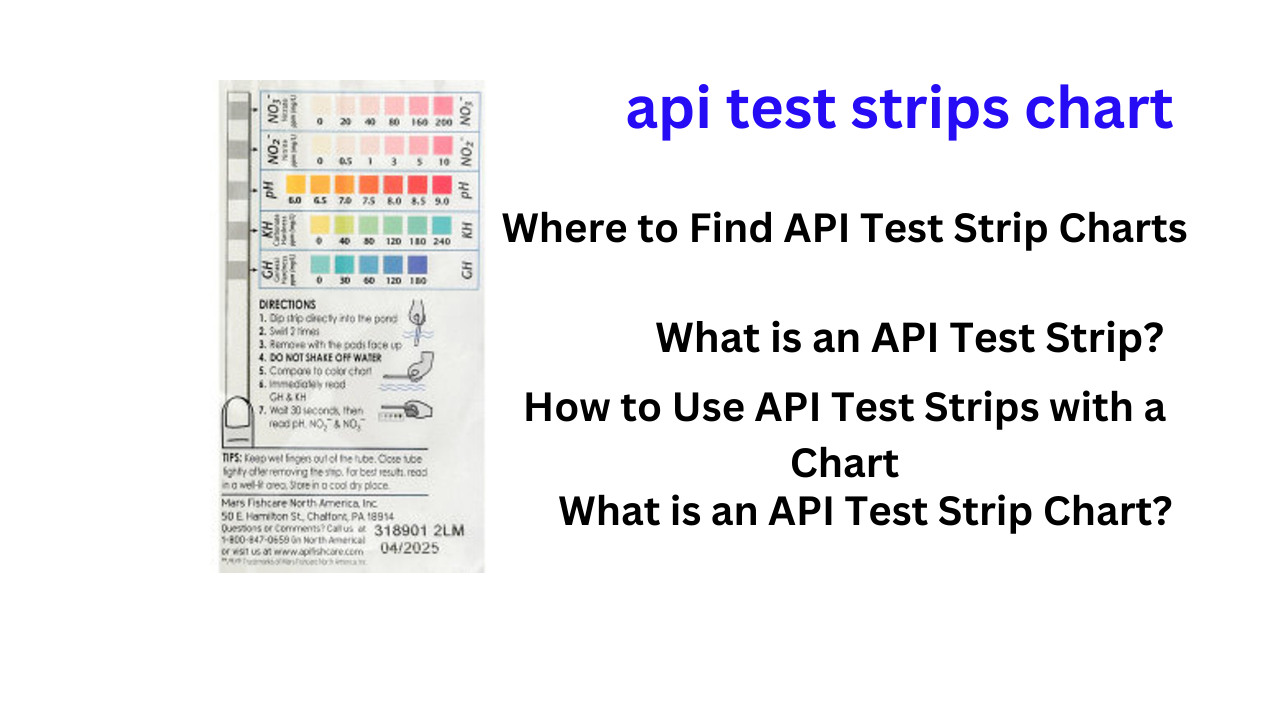
The chart is a reference guide that comes with the test strips. It usually looks like a printed sheet or a label with colored blocks corresponding to various concentration levels. You match the colours on your used strip to the chart to determine the values. Each block typically has:
- A colour swatch
- A numeric value (e.g., “0 ppm”, “40 ppm”, etc.)
- A label for the substance (e.g., pH, nitrate)
How to Use API Test Strips with a Chart:
- Dip the strip into the test liquid (usually aquarium water) for a few seconds.
- Remove and hold it horizontally.
- Wait for the colours to stabilise (often 30–60 seconds).
- Compare each pad’s colour to the corresponding part of the colour chart.
- Read the result for each parameter.
Where to Find API Test Strip Charts:
- Inside the product packaging (usually on the label or instruction booklet)
- On the manufacturer’s website (like API Fishcare)
- Some mobile apps can scan and interpret the strip automatically
Certainly! Here’s an example of an API test strip chart used for aquarium water testing:
This chart is designed for use with API’s 5-in-1 Test Strips, which measure five key water parameters:fitzfishponds.com+9PetSmart+9apifishcare.com+9
- ph: Indicates the acidity or alkalinity of the water.
- KH (Carbonate Hardness): Measures the buffering capacity of the water, which helps stabilise ph levels.
- GH (General Hardness): Represents the concentration of calcium and magnesium ions, important for fish health and plant growth.
- Nitrite (NO₂⁻): A toxic compound that should be at 0 ppm in a healthy aquarium.
- Nitrate (NO₃⁻): A less toxic compound that should be kept at low levels to prevent algae growth and stress to fish.reef2reef.com+4Pinterest+4Pinterest+4
To use the test strips:
- Dip a strip into your aquarium water.
- Swirl it twice and remove.
- Hold the strip horizontally and wait for the colours to develop.
- Compare the colours on the strip to the corresponding colour blocks on the chart to determine the levels of each parameter.PetSmart+3image.chewy.com+3Reddit+3
For accurate readings, ensure you’re using the correct chart for your aquarium type (freshwater or saltwater) and follow the instructions provided with the test kit.PetSmart+1Amazon
How Alexa Ranking Works
- what is technical seo Audit: The Complete Technical SEO Audit Checklistwhat is technical seo audit is one of the most important steps you can take to improve your website’s search visibility, organic traffic, and overall
- Best 8 way fix slow upload speed on both mobile and PC/laptopSure! Here’s a complete English guide on how to fix slow upload speed on both mobile and PC/laptop, written clearly and without using icons: Full
- How to redirect post wordpress | redirect post meaningTo redirect posts WordPress, you can use different methods, including plugins or manual code changes. Here’s how you can do it: redirect post meaningredirect post
- how to open trump account for Kids : $1,000 Trump Account ExplainedHow to Open a Trump Account for Kids in 2026: $1,000 Trump Account Explained The new Trump Account is attracting a lot of attention from
- How to Fix Slow Internet Speed: 10+ Ways to Fix a Slow Internet ConnectionHow to Fix Slow Internet Speed: 10+ Ways to Fix a Slow Internet Connection Learn how to fix slow internet speed, troubleshoot a slow internet