 Posted by

Create Backlink: Complete Guide to Building High-Quality Backlinks for SEO
Primary Keyword: create backlink
Meta Title: Create Backlink: How to Build High-Quality Backlinks for SEO
Meta Description: Learn how to create backlink opportunities, build high-quality backlinks, create dofollow backlinks, use Pinterest, YouTube, Notion, Obsidian, and develop a safe backlink strategy for SEO.
URL Slug: /create-backlink/
Backlinks remain an important part of SEO because they can help search engines discover pages, increase referral traffic, and strengthen the authority of a website. However, not every backlink has the same value. A link from a relevant and trusted website can be much more useful than hundreds of low-quality links created through spammy methods.
If you want to create backlink opportunities for your website, the best approach is to focus on relevance, quality, natural placement, and long-term link building rather than simply trying to increase the number of links.
In this guide, you will learn how to create backlinks for SEO, how to create high-quality backlinks, where you can create free backlinks, how dofollow backlinks work, and how platforms such as Pinterest, YouTube, Notion, and Obsidian can be used as part of a broader backlink strategy.
What Is a Backlink?
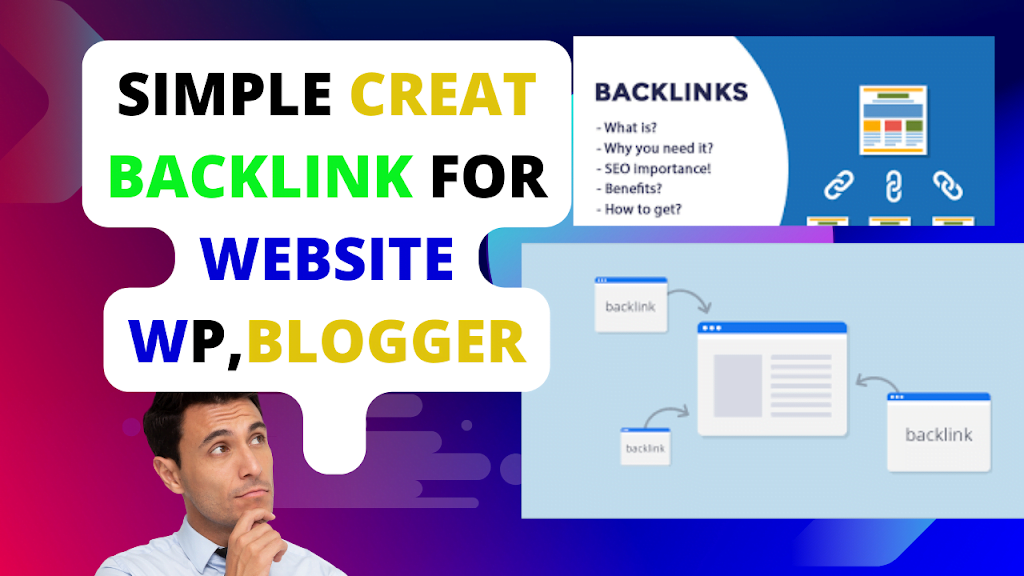
A backlink is a hyperlink from another website or web page that points to your website.
For example, suppose another website publishes an article about SEO and links to your website using a phrase such as “SEO tools.” That link is a backlink for your website.
Backlinks can help in several ways:
- They can send referral traffic to your website.
- They can help search engines discover your content.
- They can strengthen the authority and credibility of a page.
- They can support your overall SEO strategy.
- They can help users find additional useful information.
However, getting backlinks is not simply a numbers game. A smaller number of relevant, genuine backlinks can be more valuable than a large number of unrelated or spammy links.
Why Are Backlinks Important for SEO?

Search engines use many signals when evaluating web pages, and links are one part of that larger system.
When a reputable website links to your content because it genuinely finds the content useful, that link can act as a signal of trust and relevance.
For example, imagine you publish a detailed guide about personal finance. A respected finance website discovers your guide and references it in one of its articles. That is generally a more meaningful backlink than a link from an unrelated website that exists only to publish links.
This is why your goal should not simply be to create backlinks. Your goal should be to create a backlink profile that looks natural and contains links from relevant sources.
How to Create Backlinks for SEO
If you are wondering how to create backlinks for SEO, start with a simple process.
1. Create Useful Content
The foundation of successful link building is useful content.
You can create:
- Complete guides
- Original research
- Statistics pages
- Tutorials
- Case studies
- Comparisons
- Infographics
- Free tools
- Checklists
- Helpful resources
People are more likely to link to content that provides something useful to their audience.
2. Find Relevant Websites
Look for websites that publish content related to your topic.
For example, if your website is about SEO, relevant backlink opportunities could include:
- SEO blogs
- Digital marketing websites
- Technology publications
- Business blogs
- Marketing communities
- Educational resources
Relevance should be one of your most important considerations when evaluating a backlink opportunity.
3. Contact Website Owners
You can contact website owners or editors and explain why your content could be useful to their readers.
Avoid sending the same generic message to hundreds of websites. A personalized outreach message usually makes more sense.
4. Earn Natural Links
The best backlinks are often earned naturally.
Create something original, promote it, and make it useful enough that other websites want to reference it.
How to Create High Quality Backlinks

If your objective is to create high quality backlinks, focus on the quality of the website and the context in which the link appears.
A high-quality backlink usually has several positive characteristics:
Relevant Website
A backlink from a website related to your topic is generally more useful than an unrelated link.
Relevant Content
The page containing your backlink should have a logical connection with the page being linked to.
Natural Anchor Text
The clickable text should make sense in the sentence. Avoid using the exact same keyword-rich anchor text repeatedly.
Trusted Website
A website with genuine content, real users, and a good reputation is generally preferable to a website created only for selling or exchanging links.
Editorial Placement
A link that is naturally included within useful editorial content can be more valuable than a link placed in a random list or spammy page.
Create Backlinks Free: Best Free Methods

You do not necessarily need a large budget to start building backlinks.
Some ways to create backlinks free include:
- Creating useful resources
- Guest contributions where genuinely relevant
- Business and professional profiles
- Relevant community participation
- Creating social profiles
- Publishing original research
- Creating shareable infographics
- Answering questions with genuinely useful information
- Promoting content through social platforms
- Getting listed in legitimate industry resources
The important point is that “free” does not mean “create thousands of links automatically.”
Free backlink opportunities should still be relevant and useful.
Ways to Create Backlinks
There are many ways to create backlinks, but they can generally be divided into a few major categories.
1. Guest Posting
You can contribute an original article to a relevant website and include a contextual link where it genuinely helps the reader.
Guest posting should focus on providing useful content rather than publishing thin articles only to obtain links.
2. Resource Pages
Some websites maintain resource pages containing useful guides, tools, websites, or references.
If your content genuinely fits the resource, you can contact the website owner and suggest your page.
3. Broken Link Building
Find a relevant page containing a broken external link.

If you have a suitable resource that can replace that broken link, contact the website owner and suggest your page.
4. Digital PR
Original research, surveys, statistics, studies, and interesting data can attract links from journalists and publishers.
5. Linkable Assets
Create something other websites want to reference.
Examples include:
- Original statistics
- Calculators
- Free tools
- Templates
- Research reports
- Infographics
- Detailed guides
How to Create Dofollow Backlink
A dofollow backlink is commonly used to describe a normal link that does not contain a nofollow relationship attribute.
For example, a normal HTML link can look like this:
<a href="https://example.com/">Visit Example</a>
A nofollow link may contain:
<a href="https://example.com/" rel="nofollow">Visit Example</a>
However, you should not focus exclusively on obtaining dofollow links.
A natural backlink profile can contain different types of links and mentions. The most important thing is to build links from legitimate and relevant sources rather than trying to manipulate search rankings with large quantities of artificial links.
How to Create Backlinks for Website
If you want to know how to create backlinks for a website, first identify the pages you want to promote.
For example, your website may have:
- Homepage
- Service pages
- Product pages
- Blog articles
- Guides
- Tools
- Category pages
Do not point every backlink to your homepage.
Instead, build links to useful internal pages when the linked content is genuinely relevant.
For example:
Website: Example.com
Article: How to Save Money
A finance website discussing budgeting could naturally link directly to your money-saving guide.
This creates a more useful and natural backlink structure.
Creating Backlinks to Your Website
When creating backlinks to your website, think about the user first.
Ask yourself:
“Would this link be useful to someone reading this page even if SEO did not exist?”
If the answer is yes, the backlink is more likely to make sense.
You can promote your website through:
- Industry websites
- Relevant blogs
- Business directories
- Professional profiles
- Social platforms
- Resource pages
- Guest contributions
- Digital PR
- Community participation
- Partnerships
Avoid creating links on unrelated websites simply because they allow you to add a URL.
Create Profile Backlinks
Another common method is to create profile backlinks.
Some legitimate websites allow users, businesses, creators, or professionals to create public profiles.
Depending on the platform, a profile may allow you to add:
- Website URL
- Business description
- Social profiles
- Portfolio
- Contact information
Profile links can be useful for discovery and referral traffic, but they should not be treated as a shortcut to thousands of SEO links.
Create profiles on platforms that are actually relevant to your business or audience.
How to Create Backlinks on Pinterest
Pinterest can be useful for promoting visual content and generating referral traffic.
To create backlinks on Pinterest, you can:
- Create a Pinterest business or creator profile.
- Add your website where appropriate.
- Create useful pins.
- Link pins to relevant pages on your website.
- Use descriptive titles and descriptions.
- Create original graphics for your articles.
- Publish consistently.
For example, if you have an article about summer nail designs, you could create a Pinterest graphic specifically for that article and link the pin to the corresponding page.
Pinterest should primarily be viewed as a content-discovery and traffic platform rather than a way to manufacture large numbers of SEO backlinks.
Create YouTube Backlink
YouTube can also be part of your broader link-building strategy.
To create YouTube backlink opportunities:
- Create a YouTube channel.
- Add your website to the appropriate channel/profile areas.
- Publish useful videos.
- Add relevant website links where YouTube permits them.
- Link to useful resources when appropriate.
- Mention your website naturally in videos.
For example, if you publish a detailed article about “Investment Apps for Beginners,” you could create a YouTube video covering the same topic and direct viewers to the complete guide on your website.
The biggest benefit can be referral traffic and brand exposure, not simply the existence of the URL.
Create a Backlink in Notion
Notion pages can contain hyperlinks, making Notion useful for organizing and sharing resources.
To create a backlink in Notion:
- Open a Notion page.
- Highlight the text you want to turn into a link.
- Select the link option.
- Enter the URL of your website.
- Save the page.
However, whether a publicly accessible Notion page provides meaningful SEO value depends on how the page is published, indexed, and linked.
Do not create hundreds of empty Notion pages simply for backlinks.
Instead, use Notion to publish useful public resources when it makes sense for your audience.
How to Create Backlinks in Obsidian
Obsidian is primarily a personal knowledge-management and note-taking application.
You can create backlinks in Obsidian between your own notes using internal links.
For example:
[[SEO Strategy]]
This creates an internal connection between notes inside your Obsidian vault.
But there is an important distinction:
An internal Obsidian link is not automatically an SEO backlink to your website.
If you publish your Obsidian notes publicly through a suitable publishing system and include links to your website, those public pages may potentially generate referral opportunities. The SEO value depends on how those pages are published and indexed.
Therefore, do not confuse an Obsidian note-to-note backlink with an external backlink from another website.
Create a Backlink Strategy
A successful link-building campaign needs a proper plan.
Here is a simple backlink strategy you can follow.
Step 1: Identify Your Best Pages
Find the pages on your website that deserve more visibility.
These could be:
- Ultimate guides
- Original research
- Tutorials
- Tools
- Statistics pages
- Important commercial pages
Step 2: Analyze Competitors
Look at websites ranking for your target keywords.
Identify the types of websites linking to their content.
This can reveal potential opportunities.
Step 3: Create Better Content
Instead of simply copying competitor content, create something more useful.
Add:
- New information
- Original examples
- Better visuals
- Data
- Tables
- Tools
- Expert insights
Step 4: Outreach
Contact relevant websites and explain why your resource could help their readers.
Step 5: Track Your Results
Monitor:
- New referring domains
- Referral traffic
- Ranking changes
- Link quality
- Lost backlinks
Step 6: Continue Building Naturally
Backlink building is not a one-day task.
A steady approach is generally better than creating a huge number of links suddenly.
Create Bulk Backlinks: Is It Safe?
Many websites advertise services that promise to create bulk backlinks within a short period.
Be careful with this approach.
Creating hundreds or thousands of backlinks automatically does not guarantee better rankings. If those links come from irrelevant, low-quality, spammy, or manipulated websites, they can create problems rather than solving them.
Instead of asking:
“How can I create 10,000 backlinks?”
Ask:
“How can I earn 10 useful backlinks from relevant websites?”
Quality and relevance should come before quantity.
Backlink Create Website: What Should You Look For?
You may find websites that promise to create backlinks automatically or allow users to submit links.
Before using any backlink create website, check:
- Is the website relevant to your niche?
- Does it contain genuine content?
- Does it have real visitors?
- Is the website maintained?
- Is the page useful to users?
- Is the link placement natural?
- Does the website appear to exist mainly for selling links?
If a website exists primarily to publish thousands of unrelated links, it is generally not a good foundation for your SEO strategy.
Common Backlink Mistakes to Avoid
Buying Large Numbers of Cheap Links
Cheap bulk packages can contain large numbers of low-quality links.
Using the Same Anchor Text Everywhere
Repeating the exact same keyword as anchor text across many links can make your link profile look unnatural.
Creating Links on Unrelated Websites
A backlink from an unrelated website may provide little value.
Automated Spam
Automatically creating thousands of comments, profiles, forum posts, or pages is not a sustainable SEO strategy.
Focusing Only on Dofollow Links
A backlink profile should not be evaluated only by whether every link is dofollow.
Ignoring Content Quality
It is difficult to earn good backlinks if your own content does not provide anything worth referencing.
How Many Backlinks Should You Create?

There is no universal number of backlinks that every website needs.
A new website might benefit more from establishing a small number of legitimate foundational links, while an established website may naturally acquire many more links over time.
Instead of setting an arbitrary target such as 1,000 or 10,000 backlinks, track:
- Referring domains
- Relevant backlinks
- Link quality
- Referral traffic
- Rankings
- Organic traffic
- Brand mentions
A website with 50 highly relevant referring domains can potentially have a stronger link profile than a website with thousands of poor-quality links.
A Simple 30-Day Backlink Plan
If you are starting from zero, you can use this basic plan.
Week 1: Prepare Your Website
- Identify your best pages.
- Improve outdated content.
- Create one strong linkable asset.
- Check existing backlinks.
- Make sure your website is technically accessible.
Week 2: Find Opportunities
Research:
- Relevant blogs
- Resource pages
- Industry websites
- Broken links
- Business listings
- Communities
- Publications
Create a list of potential opportunities.
Week 3: Outreach
Send personalized outreach messages to relevant website owners.
Explain:
- Who you are
- Why you contacted them
- What resource you created
- Why it could help their readers
Week 4: Promote and Monitor
Promote your content through appropriate channels and monitor new backlinks and referral traffic.
Then repeat the process with better content and better prospects.
Frequently Asked Questions
What is the easiest way to create backlink?
The easiest legitimate approach is to create useful content and promote it through relevant websites, communities, profiles, and platforms where sharing the resource is appropriate.
Can I create backlinks free?
Yes. You can find free backlink opportunities through legitimate profiles, relevant resources, content promotion, communities, and other methods. However, free does not mean that every available link is valuable.
How can I create high-quality backlinks?
Focus on relevant websites, useful content, natural link placement, genuine outreach, original research, digital PR, resource pages, and editorial links.
How do I create a dofollow backlink?
A normal hyperlink without a nofollow relationship attribute is commonly described as a dofollow link. However, you do not control how every external platform labels its links.
Can Pinterest create backlinks?
Pinterest can provide links that help users discover your website and can generate referral traffic. Its value should not be judged solely by conventional backlink metrics.
Can YouTube create backlinks?
YouTube can provide opportunities to link to your website and generate referral traffic. It can also increase brand awareness and content discovery.
Can I create backlinks in Notion?
You can add hyperlinks to Notion pages. Publicly shared Notion content can be useful for sharing resources, but it should not be used to create large numbers of artificial links.
Can I create backlinks in Obsidian?
Obsidian supports internal links between notes. These are not automatically external SEO backlinks. Public publishing is required for other people to access those pages.
Should I create bulk backlinks?
It is better to avoid low-quality bulk backlink campaigns. Focus on relevant, genuine, and useful links instead.
Final Thoughts
Learning how to create backlink opportunities is an important part of developing a long-term SEO strategy. But successful link building is not about creating the largest possible number of links.
The better approach is to create valuable content, find relevant websites, build genuine relationships, promote useful resources, and earn links naturally.
You can create backlinks free, build profile links where appropriate, use Pinterest and YouTube for content promotion, and use platforms such as Notion and Obsidian for public resource sharing. At the same time, avoid automated spam and low-quality bulk backlink schemes.
The ultimate goal should be a natural backlink profile containing links that make sense for both search engines and real users.